How Traders Turn a Small Bankroll Into Seven Figures Trading Meme Coins in 2026
Need articles like this for your video? They help promote it on YouTube and Google — order them in the Telegram bot @sat_sit_bot. The bot writes and publishes the articles itself (with your YouTube video embedded) on popular topical websites (no ads). Try it free: 50 articles on us.
· based on the channel Megga
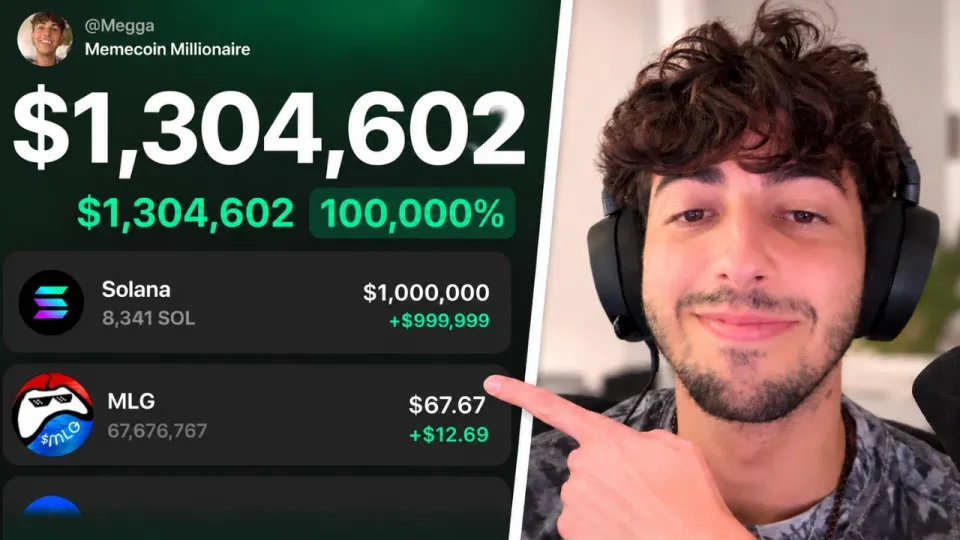
Meme coin trading is the practice of buying newly launched tokens on-chain, holding for minutes to days, and exiting into liquidity before the crowd does — and the traders who report seven-figure results treat it as a full-time, rules-based job rather than a lottery ticket. In his breakdown of how he made $1,000,000 trading memecoins, Megga walks through the trenches workflow, the losses behind the number, and the free course he offers for beginners at the free meme coin trading course. The short version: the money comes from many small, disciplined bets, not one perfect call.
What meme coin trading actually involves
Meme coin trading means speculating on tokens with no cash flow, no product, and no fundamentals, where price is driven entirely by attention and liquidity. Because there is nothing to value, the edge comes from speed, information flow, and risk control. A typical session looks like this:
- Scan launch feeds and social channels for tokens gaining early traction.
- Check contract safety: mint authority, freeze authority, holder concentration, and whether liquidity is locked.
- Enter small, with a predefined exit and a hard stop.
- Scale out into strength as other buyers arrive, never into a thin book.
- Log the trade — entry reason, exit reason, result — and review the log weekly.
The uncomfortable truth is that most new tokens trend toward zero. Profit is concentrated in a handful of early entries, which is why the traders who last are the ones who keep single losses small enough to survive a long losing streak.
The workflow behind a reported $1,000,000 run
A seven-figure result in memecoins is built from repetition, not from a secret token list. Megga's account of the journey emphasizes volume of screen time — long sessions watching charts, wallets, and social feeds — plus the discipline to act on a small number of setups. The mechanics that make this repeatable:
- Specialization. Pick one chain and one type of launch (fair launch, stealth launch, revival of an old ticker) and learn its patterns cold.
- Speed. The first minutes of a token's life decide most of the outcome; pre-built watchlists and hotkeys reduce reaction time.
- Selective aggression. Size up only when the setup matches your best historical pattern; stay small otherwise.
- Exit discipline. Take partial profits on the way up instead of waiting for a top that nobody can time.
- Record keeping. A trade journal turns random wins into a repeatable process.
Risk rules that keep a meme coin bankroll alive
Survival is the strategy: if you lose your bankroll, you cannot compound, and memecoin volatility will test you constantly. Practical rules that experienced trenches traders apply:
- Risk a fixed small percentage of the bankroll per trade — often 1–3% — and never average down into a token that is bleeding.
- Split the bankroll: a core you never touch, a trading stack, and a small 'degen' allocation for the highest-risk launches.
- Assume every contract could be a rug: verify liquidity locks and holder distribution before buying, and use a fresh wallet for new tokens.
- Guard against phishing — fake mint links and wallet-drainer sites cost traders entire wallets, a scenario several viewers described from their own experience.
- Set a daily loss limit and stop trading when you hit it; tilt is the most expensive emotion in this market.
Why most viewers of a million-dollar video will lose money
The honest framing is that a public win screenshot hides the base rate: for every account that reaches seven figures, many more fund the liquidity that makes those exits possible. That is not cynicism, it is market structure — every dollar of profit comes from someone else's buy. Three implications follow:
- You are competing with full-time traders. If you have a job and a few hours a week, your realistic goal is learning and small sizing, not replacing income quickly.
- Survivorship bias is everywhere. Videos show the winning run, not the hundreds of failed tokens and the drawdowns that preceded it.
- Capital matters less than process. A $45,000 all-time PnL and a $500 stack both fail the same way: oversized bets and no exit plan.
How to start with a small account and limited time
A small account can still be a useful training ground if you treat it as tuition rather than a paycheck. A workable sequence for someone with a day job:
- Spend the first weeks paper-trading and journaling without money at risk.
- Fund a small stack you can afford to lose entirely, and cap each trade at a tiny fixed amount.
- Trade one or two high-conviction setups per day rather than chasing every launch.
- Join communities — X spaces, Discord calls, stream chats — to hear how other traders reason in real time.
- Review results monthly and only increase size after a consistently profitable stretch.
Common questions from the trenches
Viewers of the breakdown raised recurring doubts worth addressing directly. The first is verification: how do you tell whether a token's narrative or 'tech meta' is real before it reaches a $30,000 market cap? The answer is process, not intuition — check the team's on-chain history, whether the product exists, and whether early wallets are clustered or distributed. The second is time: traders with full-time jobs should accept slower progress and smaller size instead of forcing the same hours. The third is recovery: after a big win followed by a wallet drain or a string of losses, the correct move is to drop back to minimum size and rebuild the basics, not to chase the money back. The fourth is networking: you do not need a friend group to learn, since public streams, group chats, and recorded sessions provide the same feedback loop.
Useful links
- Free meme coin trading course: https://whop.com/checkout/plan_Jfp7BxTu8pWGu/?session=chs_HL1L0oQ9QcTEa3
- Low-fee trading platform used in the breakdown: https://trade.padre.gg/rk/megga
- Twitch: http://www.twitch.tv/megga
- TikTok: https://www.tiktok.com/@meggafaze
- Twitter: https://twitter.com/megga
- Instagram: http://www.instagram.com/fazemegga
Final takeaway
Meme coin trading can produce extraordinary returns, but the reported $1,000,000 outcome is the visible tip of thousands of hours, small disciplined bets, and losses that were kept survivable. Treat the process — screening, sizing, exiting, journaling — as the product, and treat the money as a byproduct. If you want a structured starting point, Megga's breakdown includes a free course signup and a low-fee platform link, and the channel Megga is worth following for raw, unfiltered commentary on the trenches.
Key takeaways
- Meme coin trading is a high-variance game where most tokens go to zero and a small number of early entries produce nearly all the profit.
- The reported $1,000,000 result came from full-time screen time in the on-chain 'trenches', not from a single lucky buy.
- Position sizing and cutting losers fast matter more than picking the perfect token.
- Free structured course and a low-fee trading platform are linked in the breakdown by Megga.
- Expect drawdowns, phishing losses, and long flat periods — bankroll survival comes first.
Questions & answers
How much money do you need to start trading meme coins?
You can start with a small amount you can afford to lose completely, because the goal at first is learning the process rather than earning. Keep each trade to a tiny fixed percentage of that stack and only increase size after a consistently profitable stretch. Traders with larger all-time PnL mostly benefit from better networking and access, not from needing a big bankroll to begin.
How do you tell if a meme coin narrative or 'tech meta' is real before it pumps?
Check verifiable facts rather than vibes: does the product or tool actually exist, what is the team's on-chain history, are early wallets clustered or widely distributed, and is liquidity locked. Compare the setup with past metas you have studied and wait for confirmation instead of entering purely on intuition. If you cannot verify it quickly, size down or skip it.
Is it realistic to trade meme coins with a full-time job?
Yes, but with adjusted expectations: fewer trades, smaller size, and slower progress. Focus on one or two high-conviction setups per day and use pre-built watchlists so you are not glued to the screen. Trying to match the hours of full-time trenches traders usually leads to rushed, oversized entries.
What should you do after a big win followed by a loss or a wallet drain?
Drop back to minimum position size and rebuild the basics — screening, journaling, and strict exits — before scaling up again. Review what went wrong, tighten wallet security against phishing links, and avoid trying to win the money back quickly. Consistency after a setback matters more than the size of the next trade.
Source: How I Made $1,000,000 Trading Memecoins (FULL BREAKDOWN) · Markdown version