5 Things Robinhood's CEO Just Said About Ethereum and the Crypto Market
Need articles like this for your video? They help promote it on YouTube and Google — order them in the Telegram bot @sat_sit_bot. The bot writes and publishes the articles itself (with your YouTube video embedded) on popular topical websites (no ads). Try it free: 50 articles on us.
· based on the channel Altcoin Daily
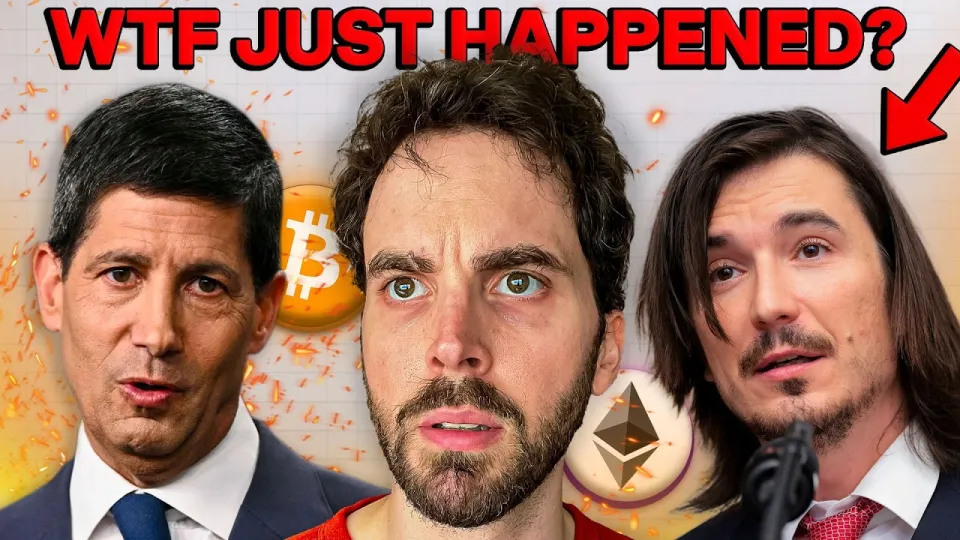
Crypto markets got a fresh narrative this week when Robinhood CEO Vlad Tenev told CNBC that tokenized real-world assets are Ethereum's next big step, and that Robinhood's involvement in the developer ecosystem and the global onchain community will ramp up. The takeaway for traders is simple: the largest US retail brokerage is positioning Ethereum as settlement infrastructure for tokenized assets, not just as a speculative coin. Anyone who wants to trade the reaction can claim a $25 deposit bonus and a 10% trading fee reduction via Liquid.
What Vlad Tenev actually said about Ethereum
Tenev framed Ethereum as the natural home for tokenized real-world assets, the onchain version of stocks, bonds and funds that Robinhood already offers in traditional form. The important nuance is that he spoke about Robinhood's involvement in the developer ecosystem and the global onchain community ramping up, rather than announcing a specific Ethereum product or a treasury purchase. For Ethereum holders, the signal is strategic rather than immediate: a regulated broker with tens of millions of funded accounts is building on public rails instead of a closed database. That matters for the ETH narrative because tokenization only works at scale if settlement is credible, auditable and liquid, and Ethereum remains the deepest venue for that. It also explains why the market treated the comment as constructive for ETH even as Bitcoin was the asset moving on macro headlines.
The Fed held rates and Bitcoin edged higher
The Federal Reserve left rates unchanged at its October meeting, and Bitcoin rose slightly after the decision. A hold was widely expected, so the move was less about the decision itself and more about the absence of a hawkish surprise. Traders watching inflation prints keep arguing that core inflation, not the headline number, is what should drive policy, and that debate is likely to stay the main swing factor for crypto into the next meeting. In practice, a steady policy rate keeps liquidity conditions unchanged, which historically favors risk assets that are not yet pricing in a recession. Bitcoin's reaction was muted, consistent with a market that has already priced a pause.
Anthropic's IPO timing and what it means for crypto
Anthropic's IPO is reportedly being targeted for mid-November, according to the video's rundown. The connection to crypto is indirect but real: Anthropic is the AI lab behind the Claude models, and AI tokens and decentralized compute networks have traded as proxies for AI enthusiasm all cycle. A large, well-received AI listing would give public-market investors direct exposure to the theme, which can pull attention and capital away from AI-adjacent crypto assets in the short term. The flip side is validation: a successful IPO prices AI infrastructure as a durable business, which tends to lift the whole sector's narrative once the initial rotation passes.
Google's new crypto security system
Google unveiled a new crypto security system aimed at protecting wallets and private keys. The detail worth noting is that this is infrastructure from a company that already runs the dominant cloud and browser stack, not a standalone crypto startup. For retail users, better key management and phishing detection reduce the most common loss vector in crypto: self-custody mistakes. For builders, it signals that mainstream security tooling is arriving for onchain applications, which lowers the compliance and engineering burden of shipping consumer products. Neither development changes price directly, but both improve the odds that the next wave of users arrives with fewer hacked accounts.
Strategy's daily dividend and the BitConnect comparison
Strategy, formerly MicroStrategy, approved a daily dividend, a structure that pays out continuously rather than quarterly. The detail that gets lost in the outrage is that this applies to the company's preferred stock, not to MSTR common shares, and the company now runs multiple listed instruments with different risk profiles. Critics on social media immediately compared the structure to BitConnect, the 2017-era Ponzi scheme that promised fixed daily returns. The comparison is overheated: a preferred dividend is a contractual distribution funded by the issuer, not a yield promised to depositors, and the underlying asset is Bitcoin held on the balance sheet. Still, the episode is a useful reminder that yield language travels faster than the fine print, and anyone holding the preferred shares should read the terms rather than the headline.
Questions traders are asking after the news
One recurring doubt is whether Tenev said anything specific about Ethereum at all. He did not announce a purchase or a product launch; the substance was tokenized real-world assets plus a stated intent to deepen involvement in the developer ecosystem and onchain community. A second theme is timing: viewers are split between expecting a November pop and another leg down, which is a reminder that macro catalysts, not CEO interviews, set the short-term direction. A third is the AI rotation: if Anthropic lists in mid-November, expect flows to test whether AI tokens can hold attention against a direct public-market alternative. A fourth is security fatigue, with several viewers noting that security headlines have hurt their cybersecurity stock positions even as the underlying tools improve.
All links from the video
- Liquid registration with a $25 deposit bonus and 10% trading fee reduction
- Altcoin Daily on X
- Liquid on X
- WEEX AI Wars hackathon with a $600K prize pool
- Bitunix registration with a bonus of up to $10k
Bottom line
The week's crypto news was less about price and more about plumbing: a major broker tying its future to tokenized assets on Ethereum, a Fed that chose to wait, a security layer arriving from Google, and a corporate Bitcoin holder experimenting with payout structures. None of these items is a buy signal on its own, but together they describe an industry moving from speculation toward infrastructure, which is where the next cycle's winners usually get built. Altcoin Daily broke down each of these stories in the video above, and the channel is the place to follow for the follow-through as the Anthropic listing and the next Fed meeting approach. If you want to act on any of it, start with the Liquid sign-up page for the $25 bonus and fee discount and size positions as if every headline could reverse.
Key takeaways
- Robinhood CEO Vlad Tenev told CNBC that tokenized real-world assets are the next step for Ethereum, and that Robinhood's involvement in the developer ecosystem and onchain community will ramp up.
- The Fed left rates unchanged at its October meeting; Bitcoin traded slightly higher after the decision.
- Anthropic's IPO is reportedly targeted for mid-November, per the video's rundown.
- Google unveiled a new crypto security system aimed at wallet and key protection.
- Strategy (formerly MicroStrategy) approved a daily dividend on its preferred stock, not a dividend on MSTR common shares.
Questions & answers
Did Robinhood's CEO say Robinhood is buying Ethereum?
No. Vlad Tenev discussed tokenized real-world assets as Ethereum's next step and said Robinhood's involvement in the developer ecosystem and global onchain community will ramp up. That is a strategic statement about building on Ethereum, not an announcement of a treasury purchase or a new ETH product.
Why did Bitcoin rise after the Fed meeting?
The Fed left rates unchanged, which was the expected outcome, so there was no hawkish surprise to sell. With policy steady, liquidity conditions stay the same, and Bitcoin edged higher as traders refocused on inflation data, particularly core inflation.
Is Strategy's daily dividend really like BitConnect?
No. The daily dividend applies to Strategy's preferred stock, a contractual distribution funded by the issuer, whereas BitConnect promised fixed daily returns to depositors in a Ponzi scheme. The comparison circulates because of the daily payout language, but the structures are fundamentally different.
How does Anthropic's IPO affect crypto?
Anthropic's listing, reportedly targeted for mid-November, gives public-market investors direct exposure to AI. That can pull capital away from AI-adjacent crypto tokens in the short term, but a strong debut also validates AI infrastructure as a business, which supports the sector's narrative over time.
Source: Uh Oh, Robinhood CEO just said this about ethereum · Markdown version